How to Survive the Night Shift: 7 Real Tips from Nurses & Shift Workers (Without Crashing at 3 AM)
How to Survive the Night Shift: 7 Real Tips from Nurses & Shift Workers (Without Crashing at 3 AM)
Anyone who has worked a 7 PM to 7 AM shift knows the feeling.
Around 1:30 AM, you feel fine. But between 2:00 AM and 4:00 AM, the dreaded "zombie window" hits. Your eyelids weigh fifty pounds, the fluorescent lights buzz in your skull, and you find yourself staring blankly at your charting screen.
We recently dug into a candid community thread where hundreds of seasoned healthcare workers, CNAs, and night shift veterans shared their unfiltered survival secrets.
Forget the generic corporate health advice. Here is what actually works on the floor to keep you awake, functional, and sane during night shifts.
1. Conquer the "2 AM – 4 AM Struggle Window"
Multiple workers in the community identified 2 AM to 4 AM as the critical danger zone:
"Try to get sleep prior to your shift, it will certainly help during the 2a–4a struggle hour... Once the mind realizes it’s almost quitting time at 4 AM, your body tends to follow lead!" — Kiya H.
The Strategy:
- Save simple tasks for this window: Don't do heavy, monotonous paperwork at 2:30 AM.
- The Splash Trick: Keep a cup of ice water nearby or head to the restroom to splash ice-cold water directly on your face.
- Cold fluids & ice chips: Several workers swear by chewing ice or sipping ice water slowly—the physical cold shock triggers alertness.
2. Space Out Your Workload (Don't Rush Charting)
A rookie mistake on night shifts is trying to get all tasks done by midnight so you can "relax." As one seasoned worker noted:
"I like to space out my workload. Some coworkers try to chart really fast, but then they have hours of sitting in silence fighting sleep. I have a whole shift to get this done—no need to rush." — Diane W.
Keep your shift structured into chunks. Spreading tasks throughout the night gives your brain small, achievable milestones.
3. Move Your Body (Even If It’s "Busywork")
Sitting at the nurses' station under warm heaters is a fast track to dozing off.
Over 40% of the community agreed: movement is the best natural stimulant.
- Extra rounds: Walk the floor and peek in on patients even outside your scheduled checks.
- Fidget tasks: Wipe down wheelchairs, restock linen carts, or organize supplies.
- Break room stretches: Do 10 bodyweight squats or calf raises every time you feel the fog creeping in.
4. Master the "Strategic Caffeine" Curve
Chugging three energy drinks at the start of your shift will cause a catastrophic crash right at 3 AM.
The Golden Rule:
- Front-load, don't tail-end: Have your primary coffee or energy drink between 9:00 PM and 10:00 PM.
- The micro-dose: Take a smaller caffeine sip around 1:00 AM to carry you through the 3 AM slump.
- Cut-off at 4:00 AM: Stop all caffeine at least 3–4 hours before clock-out, or you won’t be able to sleep when you get home in daylight.
(Alternative tip from the thread: Try green apples! The natural fructose and crunch stimulate alertness as effectively as a light espresso without the jitters).
5. Take the "Power Nap" on Your 30-Minute Break
If your facility allows it, a 15-to-20-minute nap during your legally mandated break can be a game-changer.
"Take a nap for your 30-minute break, but you’ve got to plan it middle ways through the shift." — Annie J.
Pro tip: Drink half a cup of coffee right before closing your eyes for a 20-minute nap (the "Caffeine Nap"). Caffeine takes about 20 minutes to bind to your adenosine receptors—you’ll wake up right as the boost kicks in.
6. Protect Your Daytime Sleep (Non-Negotiable)
You cannot survive night shifts if you try to live a full daytime life.
- Blackout curtains: Total darkness is essential for melatonin production.
- White noise machine / earplugs: Block out morning traffic and lawnmowers.
- Phone on Do Not Disturb: Your daytime sleep hours are just as sacred as a day worker’s nighttime sleep.
7. Don't Let Your Overnight Pay Get Shorted
Here is an unfortunate reality: surviving a 12-hour night shift is hard enough, but finding out you were underpaid is worse.
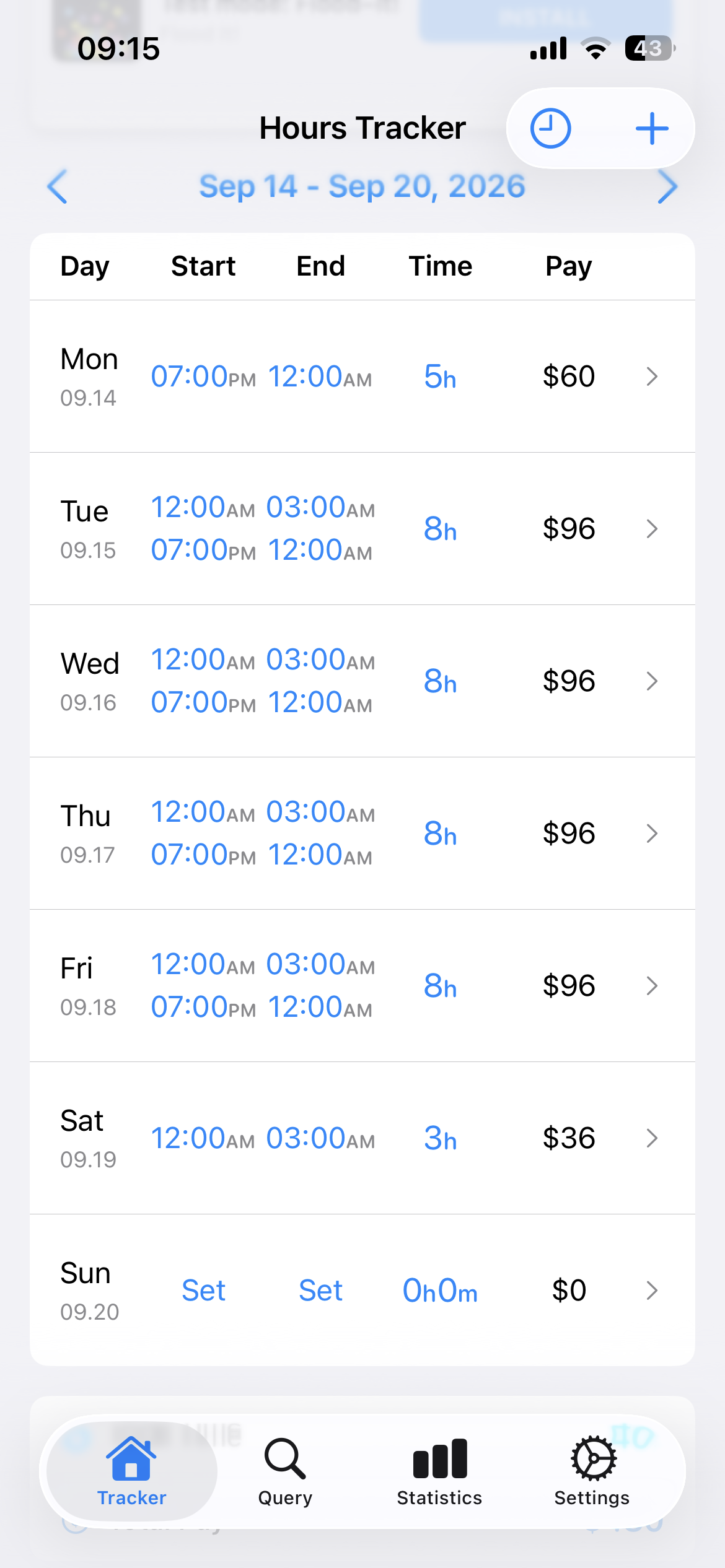
Many hospital payroll and agency systems have glitches when shifts cross midnight (00:00):
- The Midnight Split Bug: Traditional timecard systems often split a single 7 PM – 7 AM shift into two separate days, causing overtime calculations to break.
- Missing Night Differentials: Facilities frequently "forget" to apply the extra $3–$6/hour overnight bonus to your hours worked after midnight.
Always Keep Your Own Independent Log
Don't rely blindly on the facility's paper punch card or a glitchy agency app.
Using a dedicated, private iOS app like ShiftWorkLog ensures every minute of your overnight shift is protected:
- Seamless Midnight Crossing: Accurately tracks shifts starting on one calendar day and ending on the next.
- Custom Night Differential Rates: Automatically calculates overtime and hazard/shift differentials.
- One-Tap PDF Export: If your employer questions your hours, export a clean, timestamped timesheet in seconds.
- 100% Private: No logins, no corporate trackers—syncs securely to your personal iCloud.
Final Thoughts
Working the night shift requires adjusting both your biological clock and your mindset. Listen to your body, move your feet, hydrate, and make sure that every hard-earned hour you work in the dark is accounted for on payday.
👉 Working tonight? Download ShiftWorkLog on iOS and track your overnight shift with zero hassle.